1391 Broadway Bangor, ME 04401


X-Ray Radiology
When your veterinarian needs more information for diagnostic purposes, they may call for x-rays. X-rays provide views of the musculoskeletal system, and work by passing x-ray waves through the body, and taking snapshots of their distribution. X-rays are a completely safe and non-invasive procedure, and are useful for diagnosing fractures, tumors, infections, and deformities. They are often used in both routine and emergency procedures.
At Broadway Veterinary Clinic, we use digital x-rays instead of traditional film x-rays for the benefit of our patients. The benefits of digital x-rays include:
- Better quality images that allow the veterinary radiologist to make a more informed diagnosis
- They can be taken faster, which is helpful for antsy or nervous pets
- Digital x-ray images can be sent electronically to another specialist if need be
- Images can be easily stored on an electronic database for future use
In the majority of cases, there is no need for your pet to be sedated while taking x-rays. We simply will lie them down so the area we need is exposed, and try to keep them calm by stroking them and talking to them in a soothing manner.

Ultrasound Radiology
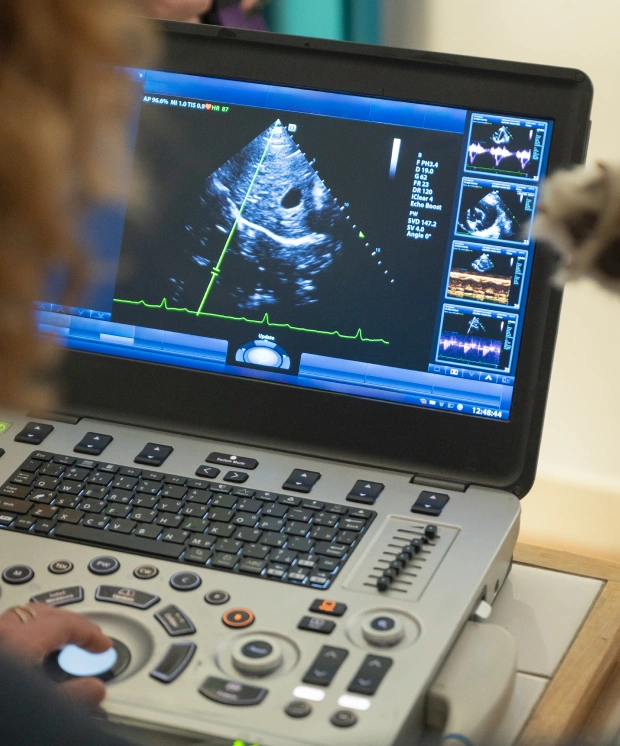
Ultrasounds are another form of radiology, which are often used in tandem with x-rays to collect more sound diagnostic information. They are also a safe, non-invasive procedure. What makes them different from x-rays is that ultrasounds use sound waves instead of x-ray waves to pass through the body and collect images. This shows information that is a little different than what an x-ray can show. Ultrasounds are useful for studying soft tissues and liquid-filled cavities of the body. The images collected by ultrasounds are real-time videos, so they can be invaluable for understanding the inner workings of bodily systems. Ultrasounds are often used to diagnose pregnancy, some forms of cancer, foreign body ingestion, and much more.
To take an ultrasound, we rarely need to sedate the patient. Sometimes, we will have to shave the area that we are looking to study. Then we will try and help the patient to feel comfortable by petting them and talking to them gently. We will have them recline so the area we need for the ultrasound is exposed, and the process of creating the image generally only takes 10-15 minutes.
In-House Laboratory
With the help of our in-house lab, we are able to provide accurate and timely diagnostic results. The faster we are able to diagnose the problem, the faster your pet can be provided with relief before the issue gets worse. Our laboratory allows us to expedite the diagnostic process because we do not need to ship our samples to third parties and wait for them to receive and process the results.
Some routine test results can be run in as quickly as 15 minutes. For other tests, which require more time, you can expect a call from us the next day to receive your results.
A physical examination and past medical records can help us make educated guesses about the inner workings of the body, but laboratory testing is how we ascertain the true root cause for certain. The precision of the results is of the utmost importance, and we will always wait to confirm a diagnosis with test results before proceeding with treatment.
Here are some common tests which we are able to run at our facility:
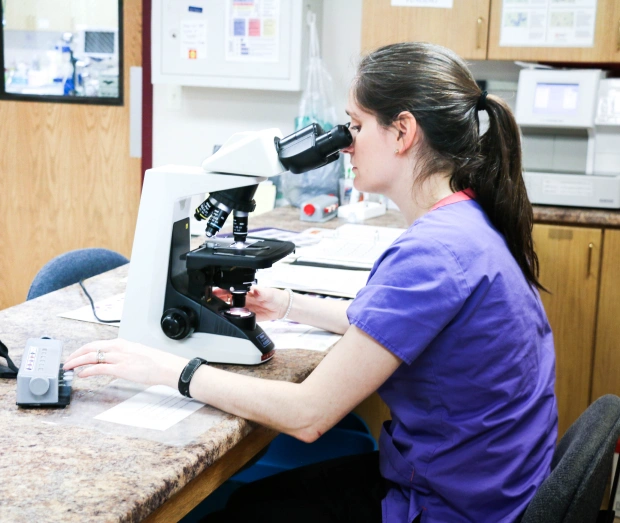
This test is often referred to by the acronym ‘CBC’. It is a very common blood test that shows the amounts of different kinds of blood cells present in your pet’s bloodstream. It can predict many different diseases and conditions.
Allergy & Dermatology Testing
Dermatitis is the word used to describe conditions that affect the hair, skin, and nails before the specific underlying condition is discovered. Dermatitis is associated with burning, itching, and pain; which in turn can lead to irritability and upset.
If your pet exhibits a combination of the following symptoms, they may have a dermatitis:
- Excessive scratching or biting
- Whimpering or crying
- Excessively licking a certain body part, frequently the paws
- Hair loss
- Hot spots
- Flaky skin
- Red or watery eyes
The underlying condition which leads to dermatitis can be allergies, fungal diseases such as ringworm, infections, skin cancer, and more. In fact, there are more than 100 different diseases classified as veterinary skin conditions. This is why laboratory testing and veterinary diagnostics are key; to treat the issue, we must understand the root cause.
After a diagnosis is made, our veterinary team will typically treat the underlying condition while simultaneously providing relief for the symptoms. Your veterinarian will work with you to plan a personalized treatment plan for your pet’s specific ailment.
One of the most common causes of dermatitis is allergies. Just like us, pets can be susceptible to pesky seasonal allergies. Pay attention to when your pet’s dermatitis symptoms are at their worst. Is it usually at a certain time of year? Or at a certain time of day?
Here are some common pet allergens to keep in mind when looking out for possible allergens:
- Weeds and grass
- Wheat (ingested in food)
- Protein sources such as chicken of fish (ingested in food)
- Perfumes or sprays
- Household cleaning products
- Fleas and other parasites
If you suspect your pet has been suffering from allergies or dermatitis, please give us a call to schedule an appointment! Together we can help your pet find relief.
Trusted Pet Care & a Friendly Welcome for Every Pet
