1391 Broadway Bangor, ME 04401

Gentle Cat Breeds That Are Great with Children

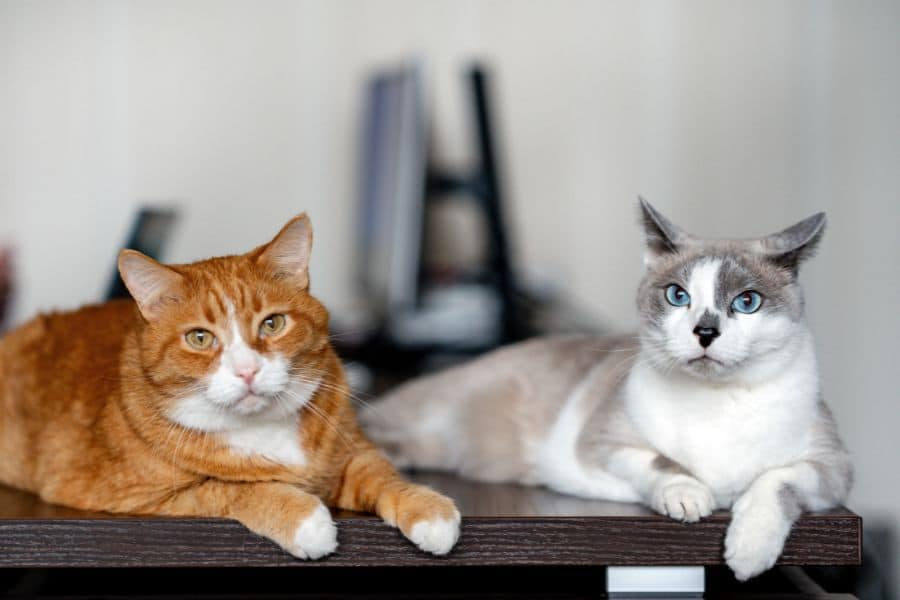
Choosing a cat for a family with children involves more than picking the cutest kitten. A good match should have a temperament that fits your household, tolerate respectful handling, and have an energy level your family can manage. Many gentle cat breeds are known for being affectionate, social, and adaptable, but every cat is still an individual. Breed can provide helpful clues, while early socialization and the cat’s personality also matter. At Broadway Veterinary Clinic, Bangor, ME, families can discuss their new cat’s health and care needs as they prepare for life together. This guide explores cat breeds good with children, what makes them family-friendly, and how to choose a companion that fits your household.
What Are the Best Gentle Cat Breeds for Families With Children?
Some of the most family-friendly cat breeds include Ragdolls, Maine Coons, Burmese, Birman, British Shorthairs, and American Shorthairs. These breeds are often described as social, adaptable, or tolerant, although individual personality matters more than breed alone.
A gentle family cat does not need to be inactive. The best match depends on your children’s ages, household activity, available space, and how much interaction the cat will receive.
| Breed | Typical Personality | Activity Level | Family Fit |
| Ragdoll | Affectionate, relaxed | Moderate | Families wanting a calm companion |
| Maine Coon | Social, friendly | Moderate | Active families with enough space |
| Burmese | People-oriented, playful | High | Families wanting an interactive cat |
| Birman | Gentle, social | Moderate | Families wanting companionship |
| British Shorthair | Calm, independent | Moderate | Respectful households |
| American Shorthair | Adaptable, friendly | Moderate | Many family settings |
| Persian | Quiet, affectionate | Low to moderate | Calm households prepared for grooming |
| Norwegian Forest Cat | Friendly, independent | Moderate | Families with room for climbing |
Breed descriptions are general. A kitten’s individual temperament can differ significantly from what is typical for its breed.
What Makes a Cat Good With Children?
A cat that lives successfully with children needs more than a sweet personality. It should have opportunities to retreat, predictable routines, and children who understand how to interact respectfully.
Important traits include:
- Tolerance of normal household activity
- Social behavior
- Ability to recover from mild stress
- Comfortable interaction with people
- Moderate playfulness
- Willingness to approach people voluntarily
- Ability to settle after activity
Easy Scientific Explanation
Cats constantly process information from their surroundings. Loud sounds, sudden movements, unfamiliar people, and forced handling can activate a stress response.
When a cat repeatedly experiences safe interactions, its brain can learn that those situations are not threatening.
| Experience | Possible Response |
| Gentle petting | Cat learns human touch can be safe |
| Sudden grabbing | Cat may become fearful |
| Quiet retreat | Cat can regulate stress |
| Predictable routine | Cat knows what to expect |
| Positive interaction | Cat may become more comfortable around people |
This is why teaching children how to interact with cats is just as important as choosing a family-friendly breed.
Are Ragdoll Cats Good With Children?
Ragdolls are often considered one of the more relaxed and people-oriented cat breeds. They can form strong bonds with family members and often enjoy being near people.
Their calm nature can make them appealing to households with children, but children should still be taught not to carry, chase, or restrain a cat without supervision.
Ragdolls are also relatively large cats, so families should provide appropriately sized litter boxes, carriers, scratching surfaces, and resting areas.
A Ragdoll may be a good choice for families looking for an affectionate companion that enjoys spending time with people.
Are Maine Coon Cats Good Family Cats?
Maine Coons are known for their large size, social personalities, and generally adaptable nature. Their playful behavior can appeal to children, while their social temperament may help them become involved in family activities.
However, their size means young children should learn how to handle them carefully. A large cat can still be injured if a child picks it up incorrectly or falls while carrying it.
Maine Coons may also benefit from:
- Sturdy climbing structures
- Large litter boxes
- Interactive toys
- Regular grooming
- Plenty of room to move
- Quiet resting spaces
Their playful nature can make them excellent companions for families that want an interactive cat.
Are Burmese Cats Good With Children?
Burmese cats are often highly social and playful. They may enjoy following family members around, playing interactive games, and receiving attention.
This can make them appealing to families with children who want an active companion. However, their need for interaction means they may not be ideal for a household where the cat will spend most of its time alone.
Burmese cats can benefit from:
- Interactive play sessions
- Puzzle toys
- Climbing areas
- Daily social interaction
- Predictable routines
A family that enjoys spending time with its pet may find a Burmese cat particularly engaging.
Are Birman Cats Gentle With Children?
Birmans are often described as affectionate and social without being as demanding as some highly active breeds. They may enjoy sitting near family members, playing, and participating in household activities.
Their balanced personality can work well for families looking for a companion that enjoys interaction but also has a calmer side.
As with every breed, children should learn to recognize when a cat wants space.
Signs that a cat may want a break include:
- Moving away
- Flattening the ears
- Swishing the tail
- Hiding
- Growling
- Hissing
- Becoming tense
These signals should be respected immediately.
Which Calm Cat Breeds Work Well With Children?
Families looking for a quieter companion may consider breeds such as the British Shorthair or Persian. These cats can be affectionate without needing constant activity.
British Shorthairs are often known for their calm and independent personalities. They may enjoy being near family members without wanting constant handling.
Persians can be gentle and affectionate, but their grooming needs can be significant. Families should understand the daily care involved before choosing one.
| Breed | Potential Advantage | Important Consideration |
| British Shorthair | Calm and adaptable | May prefer limited handling |
| Persian | Quiet and affectionate | Requires substantial grooming |
| Ragdoll | Relaxed and social | Large size and coat care |
| Birman | Gentle and interactive | Needs regular companionship |
The goal is not to find the calmest cat possible. It is to find a temperament that matches your family’s lifestyle.
How Can Children Safely Interact With Cats?
Even the gentlest cat has boundaries. Children should learn that cats are living animals rather than toys.
Teach children to:
- Let the cat approach first
- Pet gently
- Avoid pulling the tail or ears
- Never chase a hiding cat
- Leave the cat alone while eating
- Avoid disturbing a sleeping cat
- Ask an adult before picking up the cat
- Wash their hands after handling pets
Young children should always be supervised around cats.
Easy Scientific Explanation
A cat may tolerate one gentle interaction but become uncomfortable after repeated handling. Stress can build when an animal cannot escape a situation.
Providing choice gives the cat more control.
| Child’s Action | Better Alternative |
| Chasing the cat | Sit quietly and allow the cat to approach |
| Picking up without permission | Ask an adult first |
| Pulling fur or tail | Use gentle strokes |
| Following a hiding cat | Give the cat private space |
| Waking a sleeping cat | Wait until the cat is awake |
Teaching these habits early can help children and cats develop a safer relationship.
Do Gentle Cat Breeds Need Special Care?
Every cat needs routine health care, regardless of breed. However, some breeds have specific grooming, nutrition, dental, or inherited health considerations.
Families should consider:
- Appropriate nutrition
- Healthy body weight
- Dental care
- Coat grooming
- Parasite prevention
- Regular veterinary examinations
- Safe indoor enrichment
- Changes in appetite or behavior
A cat that suddenly becomes withdrawn, aggressive, or unusually quiet may not simply be changing personality. Pain or illness can also affect behavior.
This is especially important when children are involved. A child may interpret a cat’s discomfort as the cat being mean when the animal may actually be signaling that something is wrong.
How Do You Choose the Right Family Cat?
Choosing among cat breeds that are good with children should start with your family’s daily routine.
Ask:
- How old are the children?
- How active is the household?
- How much time will someone spend with the cat?
- Can the family provide daily play?
- Can adults supervise young children?
- Are family members prepared for grooming?
- Does the home have quiet areas for the cat?
- Can the family provide long-term veterinary care?
A kitten may require more supervision and training than an adult cat with an established personality.
For some families, an adult cat may actually be a better choice because its temperament is easier to evaluate before adoption.
What Should Families Know About Kitten Socialization?
Early experiences can influence how comfortable a kitten becomes around people, sounds, handling, and household activities.
A kitten that has positive, gentle exposure to different experiences may become more confident as it grows.
This does not mean forcing a kitten into every situation. Socialization should be gradual and positive.
Hypothetical Example
Imagine a family with two school-age children adopting a young Birman kitten named Daisy. The children initially want to hold her constantly, but the adults teach them to sit quietly and let Daisy approach on her own. The family creates a quiet sleeping area and uses short, gentle play sessions. Over time, Daisy becomes comfortable approaching the children because interactions remain predictable and positive. This example shows that even a naturally gentle breed benefits from respectful handling and clear boundaries.
Are Mixed-Breed Cats Good With Children?
Absolutely. A cat does not need to belong to a particular breed to become a wonderful family companion. Mixed-breed cats can have affectionate, playful, calm, or highly social personalities. When adopting an adult cat, families can often observe its behavior directly and ask shelter staff or foster caregivers about its interactions with children.
Look for a cat that:
- Approaches people comfortably
- Recovers well after mild surprises
- Accepts gentle handling
- Shows curiosity
- Does not consistently hide from people
- Has a temperament compatible with your household
Individual personality can be more useful than breed labels when selecting a family pet.
Conclusion
The best gentle cat breeds for children are not defined by breed alone. Ragdolls, Maine Coons, Burmese, Birmans, British Shorthairs, and American Shorthairs are among the breeds families may consider, but individual temperament remains essential. Children also play a major role in creating a positive relationship with a cat. Gentle handling, supervision, quiet retreat areas, and respect for feline body language can help prevent stressful interactions. Before choosing a cat, consider your family’s activity level, children’s ages, available time, grooming expectations, and long-term care responsibilities. If you are searching for a vet near you for suggestions, then Broadway Veterinary Clinic, in Bangor, ME, can help families support their new cat’s health and well-being throughout its life.
FAQs
Q1: What are the gentlest cat breeds for children?
A: Ragdolls, Maine Coons, Birmans, British Shorthairs, and American Shorthairs are often considered family-friendly choices. However, individual personality and early socialization are important factors.
Q2: What cat breed is best for a family with young children?
A: There is no single best breed for every family. A cat with a social, adaptable temperament that tolerates respectful interaction may be a better match than choosing based on breed alone.
Q3: Are Ragdoll cats good with kids?
A: Ragdolls are often affectionate, social, and relatively relaxed, which can make them appealing family companions. Children should still be supervised and taught to handle them gently.
Q4: Should I choose a kitten or adult cat for children?
A: An adult cat can sometimes be easier to match with a family because its personality and tolerance for handling are already more apparent. Kittens can also become excellent family pets but require more supervision and socialization.
Q5: How can I tell if a cat is comfortable around children?
A: Look for relaxed body language, willingness to approach people, curiosity, and the ability to move away without becoming highly fearful. Hiding, hissing, growling, flattened ears, or repeated attempts to escape indicate that the cat needs more space.


Trusted Pet Care & a Friendly Welcome for Every Pet
