1391 Broadway Bangor, ME 04401



Puppy Care
If you are welcoming a new puppy into your family, congratulations! Our team at Broadway Veterinary Clinic can help your new puppy to begin a happy and healthy life in their new home.
Here is a brief checklist of to-dos for your new best friend.
- Microchipping: We recommend that every puppy receive a microchip embedded between their shoulder blades. This will help reunite them to you if they were ever to become lost.
- Spay/neuter procedure: If you do not plan on breeding your puppy, we recommend neutering them between 8 weeks and 6 months. This will prevent an unplanned litter and curb unfavorable behaviors. In addition, spayed and neutered dogs have a lessened risk for some cancers and infections, and generally have higher life expectancies.
- If your puppy is a large or giant breed, we would like to take radiographs of their hips to screen their likelihood of developing hip dysplasia.
- Vaccinations: Puppies should receive their vaccinations in a series of three sets between the ages of 8 and 16 weeks. Here are several of our core vaccines recommended for all puppies: Rabies, DHPP (Distemper, Hepatitis, Parainfluenza, Parvovirus).
- Frequent check-up: Visit us frequently during your new pet’s first year of life to ensure they are growing up well and strong. We will help you every step of the way with a wellness plan.

Kitten Care
Are you thinking about bringing a new kitten home? Adding a cute new furry friend to your family is an exciting prospect. Our team at Broadway Veterinary Clinic can help your new kitten grow up happy and healthy.
Here are a few pointers to consider before bringing your new kitten home:
- Do you have another cat? If so, we recommend having the new kitten tested for feline leukemia and feline AIDS before introducing them.
- If you do have another cat, it’s in the best interest of safety for the kitten to be kept in a separate room or area for the first day or so of being in your home. This will increase the likelihood that when they do meet, their encounter will be a friendly one.
- Will the kitten be an indoor cat? Indoor cats have longer life expectancies than their outdoor counterparts. They are safer from both diseases and accidents.
Once the new kitten is home, we want to help get them started on the right foot so they can enjoy a long life with their new family.
Here is a list of recommended veterinary to-dos for your new kitten:
- Microchip your new kitten to keep them safe if they ever get out or become lost.
- Spay/neuter procedure will prevent an unwanted litter later on, and decrease your cat’s desire to escape. Also, spayed or neutered cats tend to have longer life expectancies.
- Vaccinations should be given to your kitten in a series of three, between 6 and 14 weeks.
Microchipping
Do you have a plan in place in case your pet becomes lost or runs away? With a small microchip embedded under the skin, you will never have to worry about your pet being without your contact information.
Too often, pets who are missing their identification tags turn up in animal shelters or veterinary offices across the country. Often, the first thing the animal care professionals will do is use a special reader to check if they have a microchip.
The microchipping procedure is quick and easy. It is no more painful or time-consuming than a shot, and no anesthesia is necessary. Once implanted, we will give you the information and paperwork to file your phone number and address into a national database. If your pet is ever lost and scanned for a chip, this database will direct their rescuers to your information so a happy reunion will follow.
Remember that if your your contact information changes, such as during a move or a phone carrier change, to update your information in the system so the chip can continue to do its job.
Of course, we still recommend that pets with microchips also have a set of ID tags. The more identification information, the better their chances of returning home after a mishap!
Spay/Neuter Procedure
At Broadway Veterinary Clinic, we strongly urge all companion animals be spayed or neutered. Once a pet has been spayed or neutered, they tend to have longer lifespans and are less prone to certain infections and cancers associated with the reproductive system. They also exhibit less behavioural problems associated with their sexual urges, like roaming and aggression.
The practice of spaying or neutering is also critically important to the fight against the pet homelessness crisis. To control the pet population, spay/neuter surgery is the number one way to prevent unwanted litters.
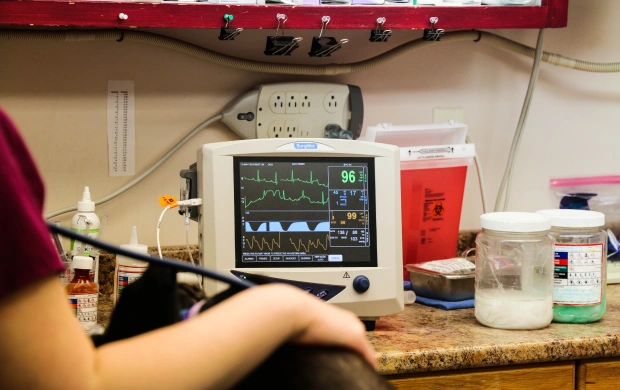
Spaying is the removal of the ovaries and the uterus of female animals. Spaying can prevent ovarian and uterine cancers, and if performed before the female’s first heat period, breast cancer. Once a female is spayed, she will no longer have heat periods, and cannot get pregnant.
Trusted Pet Care & a Friendly Welcome for Every Pet
